
Features
SatModeler is built to learn, teach, research, and engineer real missions — from single spacecraft demos to full constellations. If you need physics you can trust and visuals you can understand, this is the tool.
Start in minutes with reference missions, then scale up to your own scenarios.
The 3 pillars
What you can do (that others make painful)
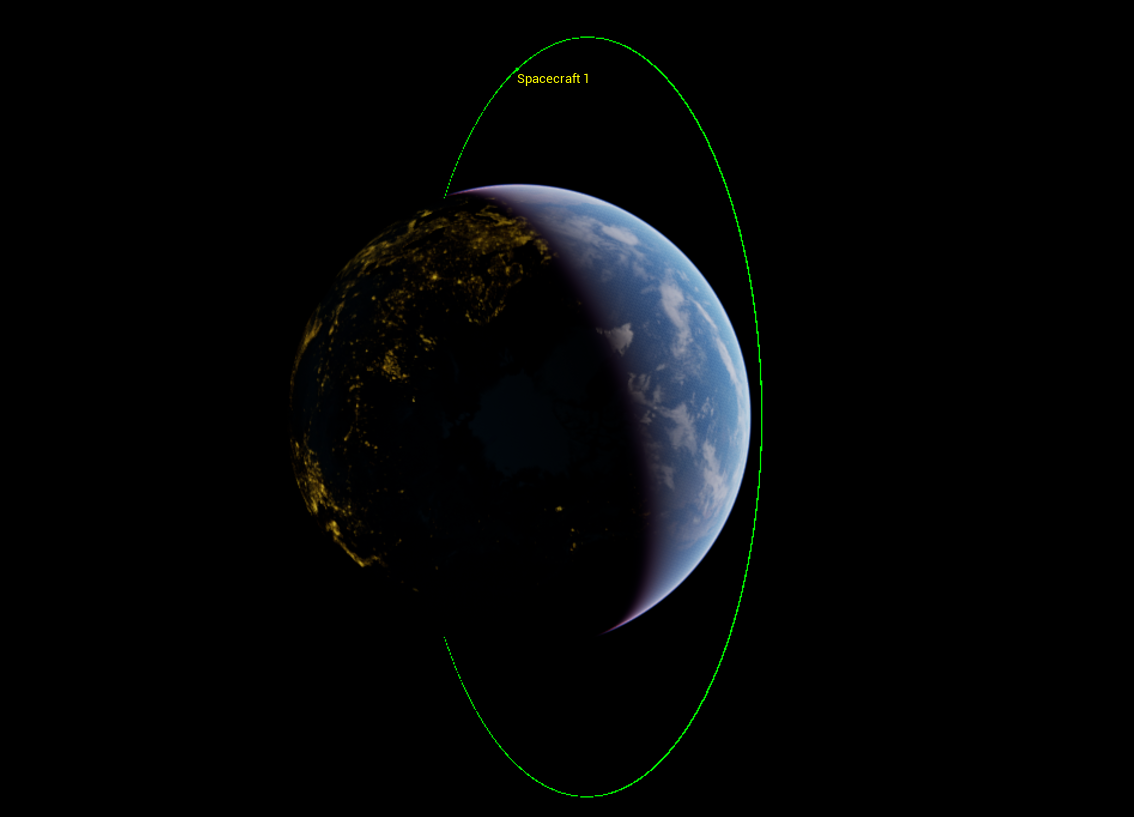
From one spacecraft to full constellations
Define your mission with a clean block-based architecture: Solver, Earth, and one or multiple spacecraft. Great for constellation simulations, formation flying, and comparative studies.
- Modular mission graph (clear and scalable).
- Default spacecraft for rapid prototyping and teaching demos.
- Shared environment so comparisons stay fair.
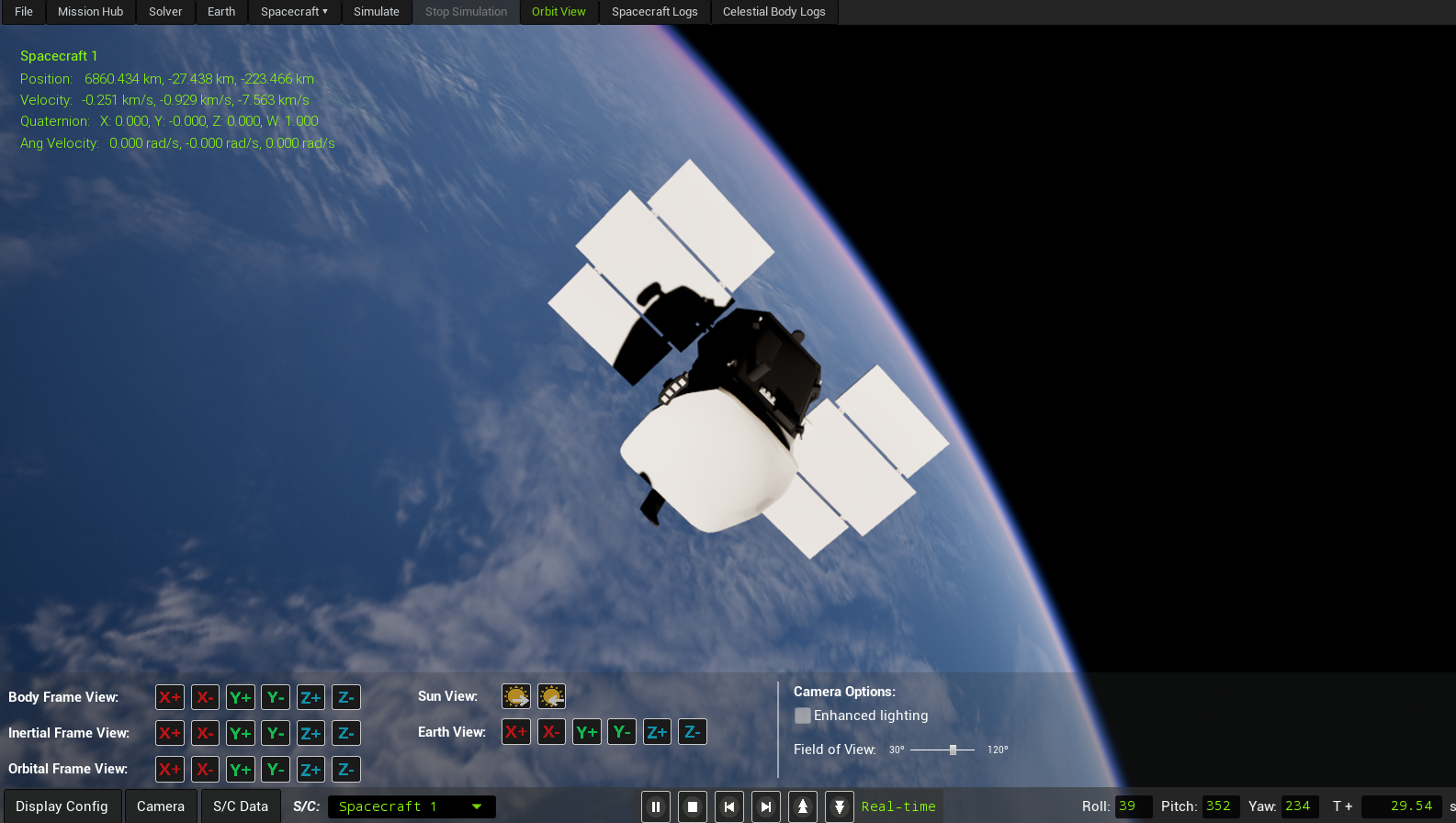
Orbit + attitude, explained in 3D
Inspect orbital motion, attitude evolution, and reference frames (Body / Inertial / Orbital) together. Validate frame conventions and pointing strategies by watching the vectors align (Sun, nadir, velocity…).
- Interactive time control: scrub, play, jump, reproduce states deterministically.
- Camera presets aligned to frames and meaningful physical viewpoints.
- Live overlays for the variables you care about.
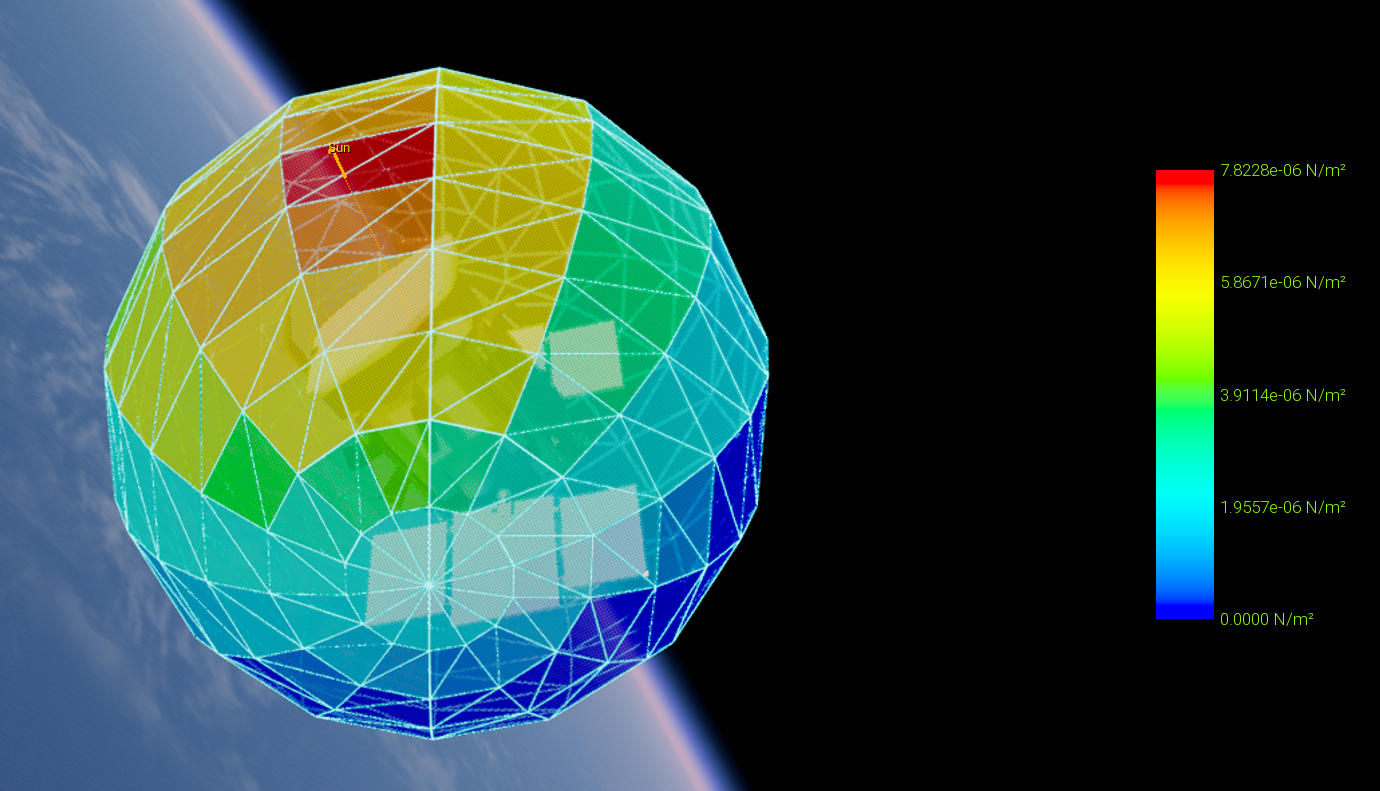
Perturbation Mesh: see forces on the surface
This is the killer feature: solar radiation pressure and aerodynamic effects are computed per perturbation mesh element, so you can understand *where* the loads come from — not just the final force/torque sum.
- SRP: per-element contributions summed to total force & torque.
- Aerodynamics: pressure distribution mapped onto geometry.
- In Orbit View: toggle overlays, tune opacity, and correlate with attitude.
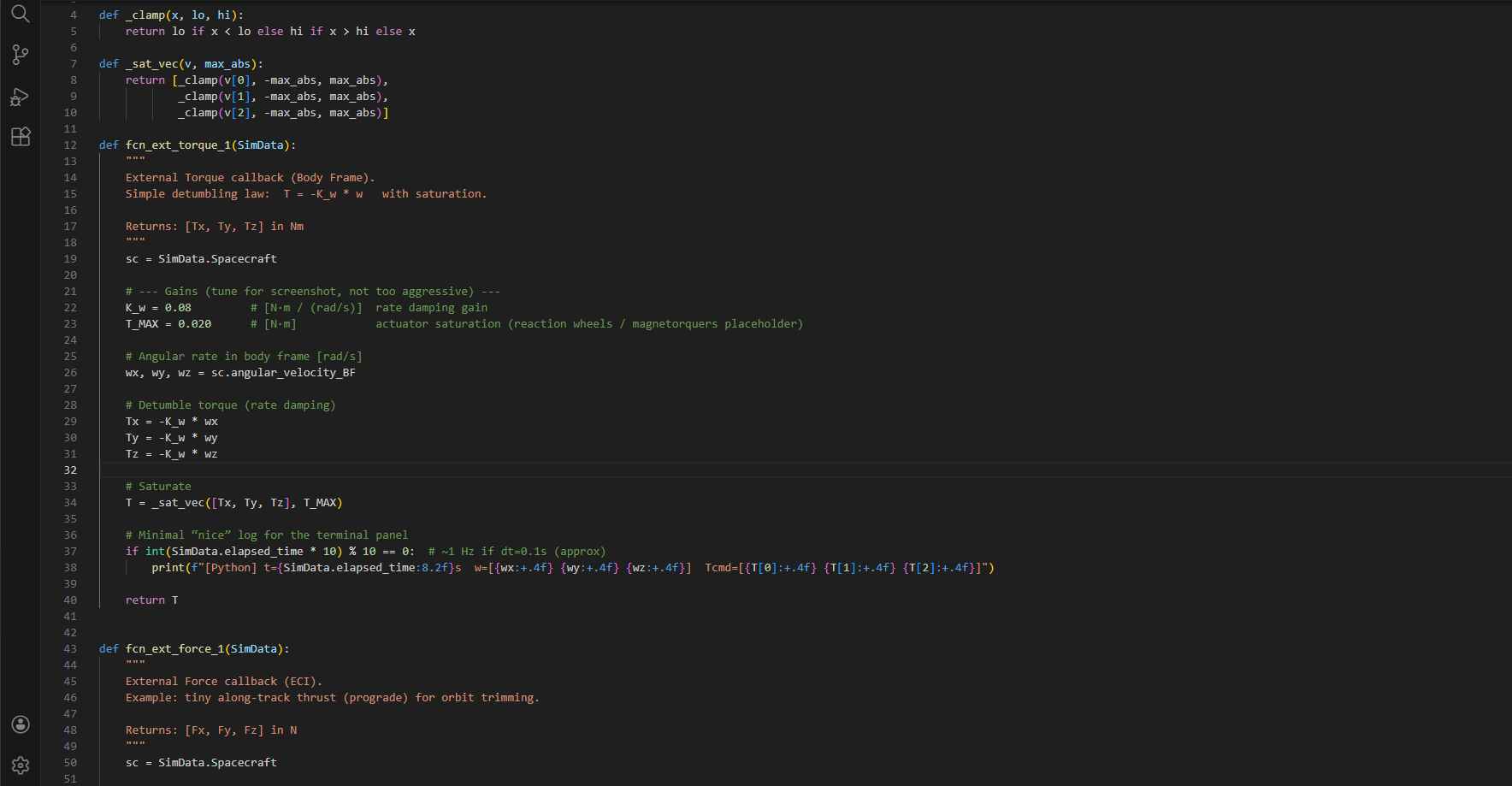
Python integration: your imagination is the limit
Put your own logic inside the simulation loop: sensor models, actuators, estimation, guidance & control, custom effects — without turning the tool into a coding-only project.
- Fast iteration: tweak parameters, simulate, inspect in 3D.
- Ideal for teaching: students see the physics, then modify behavior.
- Research-ready: prototype ideas without building a whole framework.
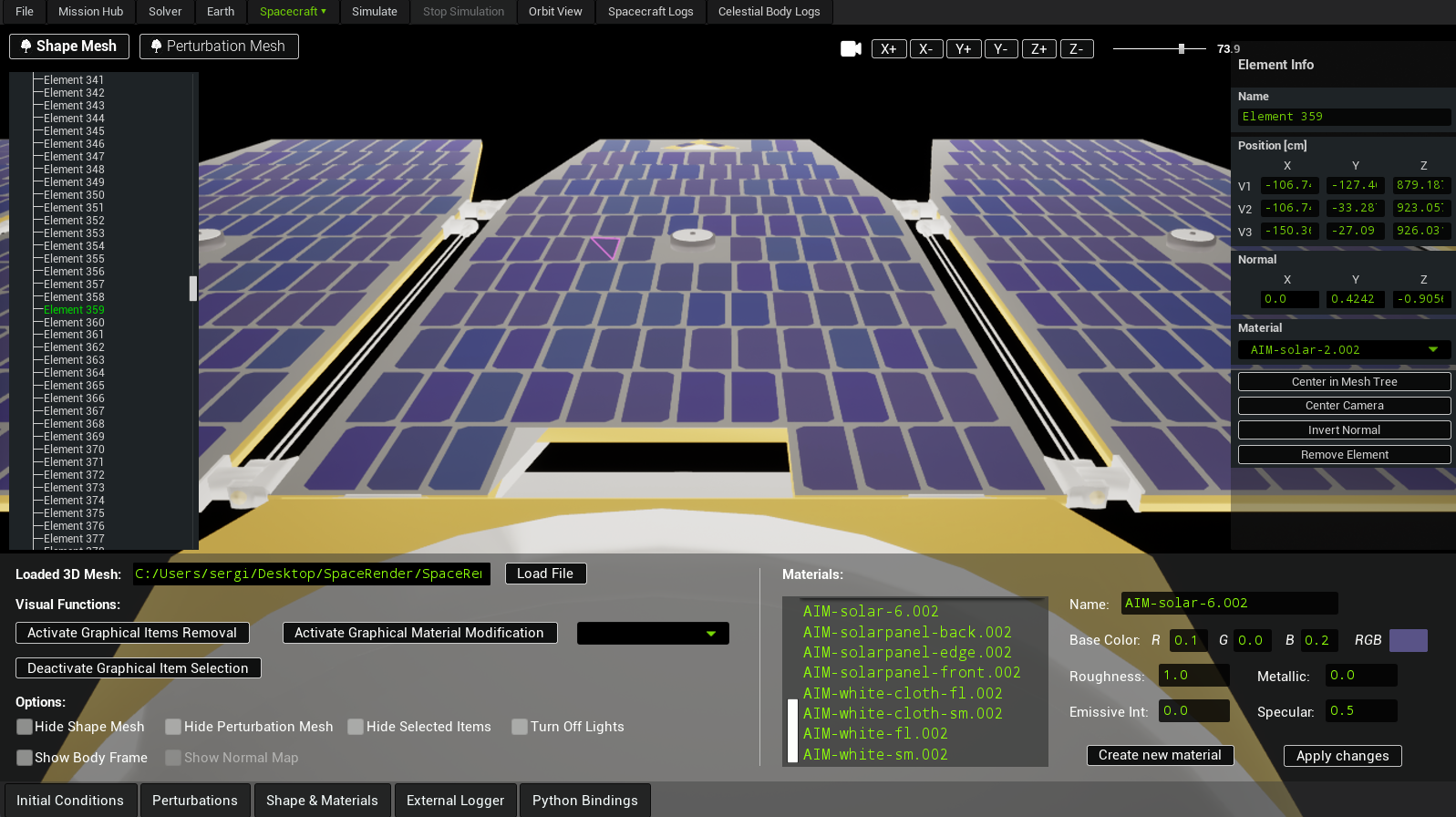
Advanced geometry import + a material system that matters
Bring real spacecraft geometry, edit it, assign materials, and use it consistently across visualization and physics (including mesh-based perturbation analysis).
- Engineering workflow: geometry is not decoration — it drives results.
- Material-driven behavior: set properties once, reuse everywhere.
- Clean visuals: “what you see is what you simulate”.
External logs: do whatever you want afterwards
Export the simulation state and derived variables into external logs so you can post-process in Python, MATLAB, Excel, custom pipelines, or a publication workflow.
- Transparent outputs: you own your data.
- Reproducible analysis: share logs, reproduce states.
- Fits any pipeline: quick plots or full research toolchains.